Chat to Cash Blueprint
using whatsapp like a boss!!

Using WhatsApp like a boss — the supplied 139-page course manual reorganised for easier online learning on desktop and mobile.
Chat to Cash Blueprint
using whatsapp like a boss!!
📲 What Is WhatsApp CRM?
A WhatsApp CRM (Customer Relationship Management) system is a tool that integrates
WhatsApp messaging with a CRM platform to help businesses manage conversations,
leads, sales, and customer support — all inside one structured system.
Instead of random chats in a phone inbox, a WhatsApp CRM allows you to:
Track conversations
Monitor all interactions
with leads and
customers in one place
Assign chats
Distribute conversations
to team members
efficiently
Automate replies
Set up automatic
responses and follow-
ups
Store customer data
Keep complete history
and information
organised
Send broadcasts
Reach multiple
contacts at scale
Manage pipeline
Move prospects through
your sales process
In short: It turns WhatsApp from a casual messaging app into a structured sales
and support machine.
🧠 Why Businesses Use WhatsApp CRM
Because WhatsApp has:
Extremely high open rates
Often 90%+ compared to email's 20-30%
Fast response times
Customers reply within minutes, not
hours
Direct, personal communication
One-to-one conversations that build trust
Global reach
Over 2 billion users worldwide
When combined with CRM functionality, it
becomes one of the most powerful customer
communication channels available.
🔥 The Best Way To Use WhatsApp
CRM
Most businesses use WhatsApp wrong.
❌ What They Do Wrong
Reply manually to every message
Don't track leads
Forget follow-ups
Mix personal chats with business
chats
Have no structured pipeline
That creates chaos.
✅ The Smarter Approach
Here's what successful businesses do
instead 👇
They implement a structured system that
combines automation with personal
touch, tracking every interaction and
moving leads systematically through a
proven sales process.
The following sections reveal exactly how
to set this up...
1️⃣ Use It as a Structured Sales Funnel
— Not Just Chat
Don't treat WhatsApp like texting. Treat it like a pipeline tool.
Contacted
First response
sent
Proposal Sent
Pricing and terms
shared
New Lead
Initial contact
received
Closed
Won or lost
outcome
Qualified
Buyer intent
confirmed
Set up stages such as:
01
New Lead
Initial contact received
02
Contacted
First response sent
03
Qualified
Buyer intent confirmed
04
Proposal Sent
Offer presented
05
Closed (Won/Lost)
Deal outcome recorded
06
Follow-Up Later
Future opportunity tracked
Every new message becomes a lead inside your CRM. You move them stage by stage.
This ensures: No lead gets forgotten • You know exactly where revenue is coming
from • You can forecast sales
Olivia Wilson
Good morning friends,
cheers for today, always
remember Success and
failure are both parts of
life. Both are not
permanent:)
Good morning to my dear,
thank you for always
support!
Chat to Cash Blueprint
Close Premium Clients Using WhatsApp Conversations

Who This Course Is For
Coaches
Building their
client base
Consultants
Seeking consistent
sales
Agency
Owners
Scaling their
business
Real Estate
Professionals
Closing high-value
deals
High-Ticket Service
Providers
Selling premium offerings
Business Owners
Selling offers £1,000+
Entrepreneurs
Struggling with
inconsistent sales
The Core Problem
Inconsistent
Conversions
Struggling to turn
conversations into closed
deals.
Unqualified
Prospects
Wasting valuable time on
leads that don't convert.
No Structured
System
Lacking a clear process for
closing high-value clients.
They already have an offer — but lack a structured closing system.
Your Specific Outcome
By the end of the course, students will:
Build a Complete
WhatsApp High-
Ticket Sales Funnel
Automate
Qualification
Increase Call
Booking Rates
Improve Close Rates
Implement
Structured Follow-
Up
Turn WhatsApp into
a Predictable
Revenue Engine
Transform your WhatsApp into a predictable, high-ticket sales
machine, ensuring consistent 5-figure months!

Complete Buyer Profile
Target Market: Who They Are
My ideal client is: Ambitious entrepreneurs aged 23–45, including beginner coaches, consultants,
freelancers, and small business owners earning between £0–£15K per month. They are active on
social media, use WhatsApp regularly, and want to monetise their expertise or services but struggle
with consistent high-ticket sales.
Core Problem: What They Struggle With & Why
Their current situation is: They have an offer (or are trying to create one), but:
Conversations feel messy and
unstructured
Leads ghost them
They don't know how to qualify prospects
They feel awkward discussing price
They rely on hope instead of systems
They are stuck doing manual follow-ups
Their sophistication level is: BEGINNER to INTERMEDIATE
Beginners:
Haven't sold high-ticket yet
Afraid to charge premium
Unsure how to structure conversations
Small Business Owners:
Have sold before
Inconsistent conversions
No CRM system
No automation
Their primary motivation is: TOWARDS achievement and gain
They want:
Financial independence
Predictable income
Confidence in selling
A professional system
Authority positioning
The Solution: What the Course Offers
The "WhatsApp Wealth System: The High-Ticket Closing Blueprint" provides a clear, actionable
system to transform inconsistent messaging into predictable high-ticket sales. It bridges the gap
between manual outreach and automated, qualified lead nurturing, empowering both beginners
and established business owners to confidently monetize their expertise.
Client's Hero Journey Framework
Zero State
Random chats. Low
confidence. Inconsistent
income. No structure.
The Gap
They must shift from casual
chatting to structured
qualification, implement
automation, learn authority
positioning, use CRM
properly, and follow up
systematically.
Hero State
A clean WhatsApp pipeline
that qualifies leads
automatically, books calls
daily, and closes high-ticket
clients consistently.
Market Position
My main competitors are:
Generic sales
courses
Cold DM strategies
Expensive sales
coaches
CRM tools without strategy
Script-only programmes
My solution is different because: It is platform-specific (WhatsApp), practical, automation-focused,
and built for modern conversational sales.
My approach challenges conventional wisdom by: Turning WhatsApp into a structured, premium
closing environment — not a casual messaging tool.

Primary Objections
Addressing Primary Objections
"Will this work in my
industry?"
Our framework is adaptable
across various industries by
focusing on universal
principles of high-ticket
conversational sales and
strategic client qualification.
"What if I don't have
many leads?"
Our course emphasizes
optimizing your existing
lead pipeline through
structured qualification and
automation, ensuring you
maximize value from every
interaction. We also address
the mistaken belief that "I
need more leads" by
showing how to improve
conversion with current
leads.
"I'm not good at sales."
We break down high-ticket
selling into practical,
actionable steps, moving
beyond the misconception
that "high-ticket selling is
pushy." Our focus is on
authentic, value-driven
conversations, not
aggressive tactics.
"CRM sounds technical."
We simplify CRM implementation and
demonstrate how it enhances
personalization, countering the
misconception that "CRM is complicated" or
that "automation removes personalization."
We show how it streamlines your WhatsApp
pipeline, qualifying leads and booking calls
daily.
"I just need better scripts."
While scripts have a place, our approach goes
deeper, focusing on strategic conversation
flow, authority positioning, and
understanding client needs, rather than
relying solely on generic scripts.

Next Steps
Next step:
👉 We now create a powerful, outcome-based
course name and build the full offer stack.
to choose from? yes 10 high converting course names
are good You got it. Here are 10 high-converting,
outcome-driven course names — built around
transformation, authority, and memorability (with
alliteration where possible).
Hey Chidi Eze how are you
doing over there?
I'm fine, how are you gonna
come back here?
I,m fine I'll be home next
month wish me luck
@reallygreatsite
8:30
02 May, 2021
💰 Chat to Cash Blueprint
Turn WhatsApp Conversations Into High-Ticket Clients

Hey — and welcome to Chat to Cash Blueprint
First of all, I want to acknowledge you for being here. If you're inside this program, it means you're
serious about turning conversations into real revenue. And that's exactly what we're going to build
together.
Right now, you might be getting messages on WhatsApp… maybe from Instagram, Facebook,
referrals, or even paid ads. But instead of those conversations turning into predictable high-ticket
sales, they probably feel random. Some leads ghost you. Some say they're interested and disappear.
Some ask about price and then go quiet. And you're left wondering what went wrong.
Here's the truth — it's not your offer. It's not the market. And it's not that people don't have money.
It's structure.
Most entrepreneurs treat WhatsApp like a chat app. But high-ticket sales don't happen in casual
conversations. They happen inside controlled, intentional, structured frameworks. And that's what
you're going to install over the next few modules.
By the end of this program, you won't just "try harder" at sales. You'll have a complete WhatsApp
high-ticket closing system. You'll know exactly what to say, when to say it, how to qualify properly,
how to position yourself as the authority, how to transition to booked calls smoothly, and how to
follow up without feeling awkward or pushy.
More importantly, you'll stop chasing leads — and start leading conversations.
We'll move step by step. First, we'll shift your mindset from chatting to closing. Then we'll install
your qualification framework. After that, we'll build authority positioning, the call conversion
system, the follow-up engine, and finally — we'll integrate everything into a structured WhatsApp
revenue system using CRM and automation.
By the time you finish, WhatsApp won't feel random anymore. It will feel like a pipeline.
So take this seriously. Implement as you go. Don't just watch — build.
Alright. Let's jump into Module 1 and start with the most important shift of all.
I'll see you inside Lesson 1.
Be sure to take me with you when you
travel again.
It was terrific. I really enjoyed it. I was
at a famous place.
Seen
Seen
Seen
7.45 AM

Getting Started
Mindset
Shift
Adopt a
premium
sales
mindset
Framework
Installation
Implement the proven
sales framework
System
Integration
Automate
processes
for
consistent
outcomes
Conversations Kill High-Ticket Sales?
Perfect.
Now we begin building the transformation.

Why Casual
Conversations Kill
High-Ticket Sales
Let's start with something that might sting a little.
Most entrepreneurs don't have a lead problem.
They have a conversation problem.
Right now, if someone messages you on WhatsApp,
what happens?
You probably respond quickly. You answer their
questions. You send details. Maybe you explain your
service. Maybe you send pricing. And then… silence.
They disappear.
Or they say, "Let me think about it."
Or worse, they ask for the price and never reply again.
And if that keeps happening, it slowly chips away at
your confidence. You start wondering if your pricing is
too high. If your offer isn't good enough. If the market is
slow. If people just "don't have money right now."
But here's what's actually happening.
You're chatting.
And chatting does not close high-ticket sales.
High-ticket sales require structure.
The Difference Between Chatting and
Leading
There's a massive difference between responding to messages and leading a controlled sales
conversation. Casual conversations feel friendly — but they kill authority. And authority is what
closes premium clients.
Think about it this way.
If someone walks into a high-end store and says, "Can you tell me about this product?" the
salesperson doesn't immediately start listing features and price.
1
They ask questions.
2
They guide the experience.
3
They qualify the buyer.
4
They control the flow.
But on WhatsApp, most people do the opposite. They answer whatever is asked. They let the
prospect control the conversation. They become reactive instead of proactive.
And the moment you become reactive, you lose positioning.
High-ticket buyers don't invest because you explained things well. They invest because they feel
guided by someone who knows exactly what they're doing.
Casual messaging creates three major problems.
It removes authority
When you jump straight
into answering questions
without qualifying first, you
signal that you're available
for anyone. There's no
filtering. No selectiveness.
And premium clients
expect selectiveness.
It creates price shock
If someone asks, "How
much is it?" and you send
the price without context,
without qualification,
without emotional
investment — you've created
a cold transaction. And cold
transactions rarely convert
at high-ticket levels.
It destroys momentum
Sales require micro-
commitments. Small yeses
that build toward a bigger
yes. But casual chatting is
random. There's no
progression. No structure.
No escalation.
The Critical Shift
WhatsApp is not a chat app.
It is a controlled qualification environment.
Every conversation must move through stages.
Qualification
Assess
fit and
need
Call Booking
Schedule
a focused
call
Positioning
Frame
value
and
purpose
Closing
Confirm
commit
ment
Authority
Identify
decision
makers
Stage one: Positioning. Stage two: Qualification. Stage
three: Authority framing. Stage four: Call booking. Stage
five: Closing.
If a conversation is not progressing forward, it is
decaying.
And decay leads to ghosting.
Let's look at a common mistake.
❌ Wrong Approach
Prospect: "Hey, can you
send me details?"
You: "Sure! Here's
everything about my
program…"
You just gave away all your
leverage.
✅ Right Approach
Prospect: "Hey, can you
send me details?"
You: "Happy to. Before I
do, can I ask — what are
you currently struggling
with when it comes to
[problem]?"
Now you've shifted
control.
You're no longer pitching. You're diagnosing.
And diagnosis builds authority.
High-ticket buyers don't want information. They want
clarity. They want certainty. They want someone who
understands their situation deeply.
That only happens when you ask structured questions.
You are not there to respond. You are there to lead.
Leadership in Conversation
Leadership in conversation means:
You decide the direction.
You decide the pace.
You decide when pricing is introduced.
You decide when the call is booked.
Not them.
When someone messages you, they are curious, not committed. This
curiosity needs to be channeled into commitment through a structured
approach.
Curiosity must be converted into commitment through
structure.
This structure is what we'll build throughout this program.
Open your WhatsApp and look at your last five sales
conversations. Ask yourself:
Did I qualify properly?
Did I lead the conversation?
Did I introduce price after context?
Did I guide them to a call intentionally?
Did I follow up systematically?
Or did I just… reply?
Awareness is the first step to control. Understanding the difference
between chatting and leading transforms your approach to high-ticket
sales, making them structured and intentional.
Review your last five WhatsApp sales conversations and write
down where structure was missing.
This is your baseline.
The Psychology of High-Ticket Buyers
In the last lesson, we discussed how casual conversations hinder high-ticket sales. Now,
understanding buyer psychology will transform your approach and help you lead with confidence.
High-ticket buyers do not buy based on information.
They buy based on certainty.
Let's break down this mindset difference:
Low-Ticket Buyers
Comparison shoppers
Focus on features & price
Look for deals
Hesitate
High-Ticket Buyers
Seek solutions
Want to eliminate risk
Desire clarity & confidence
Make decisive moves
Your job is not to convince them. Your job is to remove uncertainty.
Most entrepreneurs over-explain and over-justify when prospects ask questions. But high-ticket
buyers don't need more information; they need clearer guidance and direction.
They want better direction.
Authority Creates
Safety
Think about it like this: Imagine visiting a doctor. If they
listened, understood your symptoms, and confidently
offered a clear solution rather than presenting many
options for you to decide, you'd feel immediate relief
and trust.
Authority creates safety. And safety closes
sales.
High-ticket buyers are not looking for a friend; they are
looking for a guide. This is why qualification is powerful.
When you ask structured questions, prospects invest
effort. They provide thoughtful answers, reflect on their
situation, and clarify their goals. This investment
increases their commitment to the process.
This psychological phenomenon is known as
commitment escalation.
Every thoughtful answer given increases the likelihood
of a sale. Now, let's explore an even deeper driver:
identity.

Identity-Based
Positioning
High-ticket buyers make decisions based on identity
alignment. They are thinking: "Is this the kind of move
someone at my level would make?"
They don't want to feel like they're buying. They want to
feel like they're upgrading.
When you position your offer, avoid saying
things like:
"This programme will teach you…"
Instead say:
"This is for business owners who are ready to…"
Information-Based
"This programme will
teach you…"
Sounds instructional
Identity-Based
"This is for business
owners who are ready
to…"
Sounds selective
Selective positioning activates identity. And
identity drives high-ticket decisions.

Price Psychology and Momentum
Now let's address price psychology.
When someone asks, "How much is it?" they are rarely asking only about money.
They are asking:
"Is this in my league?"
If you drop a price without context, you create shock.
But if you introduce pricing after:
Understanding their goals
Clarifying their pain
Highlighting the gap
Confirming urgency
Then price becomes logical instead of emotional.
This is why we never lead with price. Price is the closing mechanism, not the opener.
Another critical psychology factor is momentum.
Momentum is emotional movement toward a decision.
Momentum Builds When:
Questions go deeper
Stakes become clearer
Urgency increases
The outcome feels tangible
Momentum Dies When:
The conversation stalls
The prospect disappears
You over-explain
You become reactive
High-ticket buyers need momentum.
And your structured WhatsApp flow will create it.
Understanding Fear &
Building Confidence
Even confident buyers experience fear before investing.
Not fear of you. Fear of making the wrong decision. Fear of
wasting money. Fear of failing again.
"If you understand this, you won't interpret
hesitation as rejection. Instead, you'll interpret it as
unresolved uncertainty."
Your role becomes clear - use a 3-item smart layout with
big bullets:
1
Clarify the cost of staying the same
2
Clarify the path forward
3
Clarify what success looks like
"Confidence is transferred, not created."
If you feel unsure when discussing your offer, they will feel
unsure buying it. If you feel calm, structured, and certain,
that emotional tone transfers.
"You are not trying to get someone to buy. You are
trying to determine if they are a fit."
That shift alone removes pressure. And when you remove
pressure, prospects relax. Relaxed buyers convert.
High-ticket buyers want clarity, not information
Authority creates safety
Momentum creates decisions
"Write down the last time someone hesitated to
buy from you. Ask yourself: Was it really about price
— or was it about uncertainty? Start seeing
hesitation differently."

The WhatsApp Revenue Framework
The Structure Behind Every $1K+ Conversation
Up to this point, we've talked about mindset, psychology, and
authority. Now we bring it all together. Because structure is what
turns knowledge into results. High-ticket sales are not random. They
follow a pattern. Every £1,000+ conversation that ends in a sale
moves through predictable stages — whether you realise it or not.
When you don't control those stages, the conversation drifts. When
you do control them, conversion increases dramatically.
In this lesson, I'm introducing you to the backbone of this entire
course. The WhatsApp Revenue Framework. This is the
structure behind every high-ticket sale you'll close inside
WhatsApp.
1
Warm Entry
2
High-Level Qualification
3
Authority Framing
4
Tactical Transition
5
Structured Next Step
Let's walk through each one.
Stage One: Warm Entry
This is the moment someone messages you. Most
people waste this moment by jumping straight into
explanation. But Warm Entry is about control and
positioning. Your goal is simple: Acknowledge
them. Set expectation. Signal structure.
For example:
"Hey, thanks for reaching out. Before we
continue, I need to ask you a couple quick
questions to see if this is a good fit."
That sentence does something powerful. It
positions the conversation as selective and guided.
It immediately shifts you into leadership. Warm
Entry should never feel chaotic. It should feel
intentional.
Acknowledge immediately
Set clear expectations
Signal structure early
Position as selective
Take leadership role
Stage Two: High-Level
Qualification
This is where most sales are won or lost. Qualification is
not interrogation. It is structured discovery. You need
clarity on four things: Their current situation. Their
desired outcome. Their urgency. Their investment
readiness.
If you skip these, you're guessing. And guessing leads to
low close rates. Qualification builds emotional
investment. Because the more someone talks about
their goals and pain, the more real it becomes.
Strategic Question Example: "What would
success look like for you in the next 3–6
months?"
You're not just gathering data. You're
increasing desire. That's strategic.

Stage Three: Authority Framing
After Qualification
Don't pitch immediately.
You frame.
Demonstrate
Expertise
"Based on what you've
shared, I can see exactly
what's happening."
Build Trust
Reflect their problem
clearly. Understanding
builds trust.
Framing sounds like this: "Based on what you've shared, I can see exactly what's happening." That
sentence communicates expertise. Then you briefly summarise their situation. When you reflect
someone's problem clearly, they feel understood. And understanding builds trust.
Authority Framing bridges qualification to solution. Without framing, your offer feels abrupt. With
framing, your offer feels logical.

Stage Four: Tactical Transition
The Bridge to the Call
High-ticket sales rarely close fully in
chat. The chat is for qualification. The
call is for conversion.
Your transition should feel natural, not
forced.
Example Transition
"The next step would be a short strategy call
where we map this out properly. If it makes
sense, we'll talk about working together."
Notice what that does:
It removes pressure
It sets expectation
It positions the call as valuable, not salesy
This increases booking rates dramatically.
Stage Five: Structured Next Step
This is where momentum either accelerates or dies. If someone qualifies well, you move directly to
calendar booking. If someone hesitates, you follow structured follow-up. But what you never do is
leave it open-ended. Open-ended conversations decay.
Direct Booking
"Here's the booking link."
Clear Action
"Choose a time that works."
Scheduled Follow-Up
"I'll follow up tomorrow."
Always end with a clear next action. Clarity prevents ghosting.

Why This Framework
Works
Because it aligns with how high-ticket buyers make
decisions.
Warm Entry
Creates safety
Qualification
Builds emotional investment
Authority Framing
Builds trust
Tactical Transition
Builds momentum
Structured Next Step
Builds commitment
It's psychological sequencing. Without sequence, you're
improvising. With sequence, you're engineering
outcomes.
And here's something critical. This framework is not
about being robotic. It's about being intentional. The
words can vary. The tone can vary. But the stages never
change.

Chat to Cash Blueprint
The Structure Behind Every
$1K+ Conversation
Master the proven framework that transforms WhatsApp conversations into consistent high-ticket
sales.
🔹 How to Handle
Unsubscribe Properly
⚠️ Critical
Warning
monitors spam
complaints and
blocks
numbers fast.
This is critical. Always
provide a clear way for
contacts to opt out of
broadcasts.
Include in every broadcast:
"Reply STOP to
unsubscribe from these
messages."
When someone replies
STOP:
1.Immediately tag them
as "Unsubscribed"
2.Remove from all
broadcast lists
3.Send confirmation:
"You've been
unsubscribed. Thanks
for your time!"
4.Never message them
again unless they re-
opt in
Respecting opt-outs protects your
number, maintains trust, and keeps your
WhatsApp CRM running smoothly.
Forward Progression
More Clarity
Define needs
and outcomes
More Structure
Set timeline and
process
More
Commitment
Confirm intent
and next steps
Every high-ticket WhatsApp conversation must move forward. Forward means: More clarity. More
commitment. More structure. If it's not progressing, it's decaying.
Now I want you to imagine something. Imagine every lead that messages you goes through this
structured process. No more random back-and-forth. No more price-drops without context. No
more awkward "let me think about it." Just clean, controlled progression. That's what we're
building.
Take-Action Tool
Write the five stages somewhere visible. Warm Entry. High-Level Qualification. Authority
Framing. Tactical Transition. Structured Next Step. Memorise them.
Because from this point forward, every conversation will run through this system.
Before we move into Module 2 — where we'll break down the exact qualification questions and
sequence — I want you to map this framework onto your last conversation. Identify where structure
was missing. Did you skip framing? Did you introduce price too early? Did you fail to transition
clearly? This awareness is what transforms results.
In Module 2, we go tactical. You'll get the exact 4-step qualification formula and the questions that
filter serious buyers instantly. This is where your conversion rate starts climbing. Ready to move into

Mom is good here, you don't
forget to eat, kid
@reallygreatsite
How are you mom?
Okay mom, I won't forget,
mommy, take care of your
health there too
See you my son
Samira Hadid
Online
Seen
Seen
7.50 AM
Seen
Seen

The 4-Step
Qualification
Formula
This is where things get tactical. Now we install the
engine.

The Qualification
Engine
Welcome to Module 2. Up until now, we've shifted your
mindset. You understand structure. You understand
psychology. You understand authority. Now we install
the engine.
Because qualification is the gatekeeper of high-ticket
sales. If you qualify weakly, you close weakly. If you
qualify strongly, closing becomes natural. Most people
don't struggle with closing. They struggle with
qualifying.
When qualification is shallow, objections explode later.
When qualification is deep, objections dissolve
naturally.
So in this lesson, I'm giving you the exact 4-step
WhatsApp Qualification Formula you'll use in every
conversation moving forward.
Step 1
Current Situation
Step 2
Desired Outcome
Step 3
Urgency & Timeline
Step 4
Investment Readiness
That's it. Simple. Structured. Powerful. Let's break each
one down properly.
Step One: Current Situation
You cannot recommend a solution if you don't
understand the problem clearly. And here's the
mistake most people make. They ask surface-
level questions like: "What do you need help
with?" That's vague.
Instead, you want depth. Ask something like:
"What are you currently doing to solve
[problem]?"
"What's been the biggest challenge for
you so far?"
What This Reveals
Their experience level
Their awareness level
Their frustration level
Their sophistication
It also increases emotional investment.
Because when someone types out their
struggle, they relive it. And reliving pain
increases desire for change.
Don't rush this step. This is where most leverage is built.

Step Two: Desired Outcome
Current Struggle
Pain Points
Emerging Clarity
Vision of Success
Now we shift from pain to vision. This is powerful because high-ticket buyers invest in
transformation, not relief.
Ask:
"What would success look like for you in the next 3–6 months?"
Or:
"If this worked perfectly, what would change for you?"
Now they're imagining improvement. And imagination builds momentum. This step also helps
you qualify ambition. Someone who says, "I just want to see what happens," is not the same as
someone who says, "I need this solved within the next quarter."
Clarity of outcome signals seriousness. And seriousness predicts conversion.
Step Three: Urgency & Timeline
This is where you separate browsers from buyers. Because someone can have pain and desire — but
no urgency. And urgency drives action.
The Question
"If you found the right solution,
how soon would you want to get
started?"
Structured Options
Immediately
Within 30 days
Just exploring
This does something subtle. It forces a commitment level. If they say "just exploring," you already
know not to invest heavy time. If they say "immediately," momentum increases.
Never skip urgency. Time pressure increases decision velocity.
Step Four: Investment
Readiness
This is the step most people avoid. And that's why they
waste hours on unqualified leads. You must pre-frame
price range before booking a call. Not exact pricing yet —
range alignment.
For example:
"Just so we're aligned — clients typically invest
between £X and £X to solve this properly. Would that
be comfortable for you if it makes sense?"
Calm. Direct. Confident. Notice the phrasing. You're not
asking if they can afford it. You're asking if it would be
comfortable if it makes sense. That protects positioning.
The Psychological Effect
If they say yes, they've pre-committed
financially before the call. If they hesitate,
you've saved yourself a wasted booking.
Pre-qualification increases call close rates
dramatically.

The Power of Sequence
Current Situation
Desired Outcome
Urgency
Investment Readiness
Now let's talk about flow. These four steps must happen in sequence. If you introduce price before
urgency, it feels abrupt. If you ask urgency before outcome, it feels pushy. Sequence creates
comfort. And comfort creates compliance.
Now here's something important. You don't need to ask these like a robot. You can adapt language
to your style. But the structure must stay intact.
The Real Power
When someone answers all four steps
positively, the close is almost done before the
call even happens.
Because they've:
Acknowledged pain
Clarified desire
Confirmed urgency
Accepted investment range
The call becomes confirmation, not persuasion. That's how high-ticket systems are built.
Take-Action Tool
Write your customised version of the 4-Step Qualification Formula tailored to your niche.
Then use it in your next three WhatsApp conversations. Do not skip steps. Track how
different it feels compared to casual chatting.
Because once you install qualification properly, your closing rate will never be the same.
Before we move into Lesson 2 — where we'll teach you how to identify buying signals instantly — I
want you to implement this immediately. Next up: Module 2 – Lesson 2: Identifying Buying Signals
vs. Browsers. This is where you stop wasting time forever. Ready? Perfect. Now we sharpen your
efficiency.
Identifying Buying
Signals vs. Browsers
The Power of
Discernment
Master the art of discernment and stop wasting time
forever. Now that you have the 4-Step Qualification
Formula, there's something equally important you must
master. Discernment. Because not every lead deserves
equal time, energy, or attention.
One of the biggest mistakes beginners and small
business owners make is treating every enquiry like a
guaranteed opportunity. It's not. Some people are
buyers. Some people are browsers. And if you don't
know the difference, you will burn out fast.
A Browser
Is curious
Asks surface-level questions
Avoids specifics
Talks about "someday"
A Buyer
Is committed
Answers deep questions
Provides details
Talks about "now"
Your job is not to convince browsers. Your job is to
identify buyers quickly. Because buyers close. Browsers
drain.
Now here are the most common buying signals you
should look for inside WhatsApp conversations.
The Four Critical Buying Signals
1
Specific Pain
Buyer says: "I've
tried three
different
strategies and
nothing is
working."
They are
emotionally
invested. They've
attempted
solutions. They
feel friction.
Browser says:
"Just exploring
options."
Specificity equals
seriousness.
2
Defined
Outcome
Buyer says: "I
need to hit £20K
months
consistently
within the next
quarter."
That's clarity.
Browser says: "I
just want to
grow."
Vagueness equals
low commitment.
3
Urgency
Language
Buyers use time-
bound phrases:
"I need this
fixed soon."
"I can't
afford
another slow
month."
"I'm ready to
move
forward."
Browsers use soft
language:
"Maybe."
"Possibly." "I'll see."
Urgency language
predicts action.
4
Financial
Comfort
When you
introduce
investment range
and someone
says: "If it makes
sense, that works."
That's a strong
signal.
If they
immediately pivot
to: "Is there a
discount?" You're
likely dealing with
hesitation or
misalignment.
High-ticket buyers
ask about value
before
negotiating price.
Your New Standard
Browsers
Qualified Leads
Calls
From this point forward, you have a new standard. You are looking for these four signals in every
conversation:
The Four Signals
1.Specific Pain
2.Defined Outcome
3.Urgency Language
4.Financial Comfort
When you see 3 or 4 of these signals, you invest
time. When you see 1 or 2, you stay polite but
brief. When you see none, you move on quickly.
This is not about being rude. This is about
being strategic.
Your energy is finite. Your time is valuable. High-ticket sales require focus. And focus requires
discernment.
Take-Action Tool
Review your last five WhatsApp conversations. Identify which were buyers and which
were browsers. Look for the four signals. Notice the patterns.
Then commit to this: From now on, you qualify before you invest.
You now have the complete qualification system. The 4-Step Formula. The buying signals. The
discernment framework. This is how you stop wasting time and start closing consistently. Welcome
to the next level of your business.

📘 Module 2 – Lesson 4
Handling "Just Looking" Leads
Without Wasting Time
An 800–1500 word voiceover script from the Chat to Cash Blueprint training course.
Understanding "Just Looking" Leads
There's a sentence that quietly destroys sales momentum. "I'm just looking." Or: "I'm just
exploring options right now."
If you don't handle this properly, you'll either:
Start over-explaining
Try harder to convince
Lower your positioning
Or waste hours nurturing someone who isn't ready
So let's fix that.
What "Just Looking" Actually Means
It rarely means: "I will never buy."
It usually means one of three things:
Low urgency
Low clarity
Low commitment
It does NOT mean: "Convince me harder."
The Critical Mistake
The mistake most entrepreneurs make is
trying to convert curiosity into urgency. That's
not your job.
Your job is to filter readiness.
Remember this: WhatsApp is a qualification
tool — not a persuasion battlefield.
Handling "Just Looking" Leads
Without Wasting Time
An 800–1500 word voiceover script from the Chat to Cash Blueprint training course.
Reframing 'Just Looking'
When a lead says "I'm just looking," it's not a dead end. It's an opportunity to shift the conversation
and qualify their intent. Your goal is to move them from passive browsing to active engagement, or
politely disqualify them if they're not a good fit.
Strong Response #1
Sure thing. Just to make sure I'm not sending you irrelevant info, what exactly are you
looking for?
Authority Response #2
No worries at all. If you're just exploring, can you tell me what you hope to achieve by
exploring our solutions?
Chasing lowers perceived value. Period. Let them know you're busy and valuable.
Three Strategies for Redirecting
Browsers
When faced with a "just looking" lead, instead of pushing harder, employ these strategies to either
re-engage them productively or gracefully disengage:
1
Light Nurture
Offer concise, valuable
resources like short articles,
case studies, or video clips that
address common pain points
or provide insights related to
their interests. The goal is to
provide value without requiring
a deep commitment, keeping
them engaged passively until
their urgency or clarity
increases.
2
Educational Redirect
Shift the conversation from
direct selling to educating. Ask
questions that help them
uncover their underlying needs
or challenges. For example,
"What specific problems are
you hoping to solve, even if
you're just exploring?" This
positions you as a helpful
expert, not a pushy
salesperson.
3
Disqualification
If a lead remains vague or
shows no real intent after your
attempts to engage, it's okay to
politely disqualify them. State
clearly that your services are for
those actively seeking
solutions, and offer to
reconnect when they're ready.
This preserves your time and
positioning.
The Powerful Mindset Shift
Abundance
There are millions of people
who need what you offer.
There's no scarcity of good
leads.
Detachment
Your worth as a business
owner is not tied to this
specific lead saying "yes."
There will be others.
Authority
You are the expert, the guide.
You qualify them, not the
other way around.
Abundance
Detachment
Authority
This is crucial for anyone building high-ticket systems, because high-ticket buyers are often testing
your frame. If you chase, you fail.
The Advanced Move
This is where you embody the mindset shift. It's not just about what you say, but how you say it—
and what you don't say.
If you wouldn't say it to a friend, don't say it to a lead. Be professional, direct, and valuable.

Your System Going Forward
What NOT to Say
Avoid these common, momentum-killing phrases:
“What can I help you
with?”
Too broad. Implies you're a
general assistant.
“Let me tell you all
about our amazing
product.”
Pushes a sale before
understanding their needs.
“Are you interested in
buying today?”
High pressure, instantly
puts them on the
defensive.
Your System Going Forward
Here's the system:
0
1
1. Filter
Use direct, value-driven
questions to quickly determine
if they are a good fit for your
offer.
0
2
2. Nurture
Provide targeted value
(content, insights) if they show
genuine interest but aren't
ready to buy now.
0
3
3. Disqualify
Politely remove leads who
aren't a good fit or aren't
serious, saving time and energy.
High-ticket buyers don't need convincing; they need qualifying. They want to invest wisely, not
be sold to.
Take-Action Tool: Craft Your "Just Looking" Script
Based on the authority responses and the three strategies, draft a 3-5 message sequence
you can use the next time someone says "I'm just looking." Practice it until it feels natural.
Next Up: Mastering the Art of the Follow-Up
In the next lesson, we'll dive deep into follow-up strategies that keep you top-of-mind without
being annoying, ensuring you capture leads who convert later.
Forward Progression
More Clarity
Define needs
and outcomes
More Structure
Set timeline and
process
More
Commitment
Confirm intent
and next steps
Every high-ticket WhatsApp conversation must move forward. Forward means: More clarity. More
commitment. More structure. If it's not progressing, it's decaying.
Now I want you to imagine something. Imagine every lead that messages you goes through this
structured process. No more random back-and-forth. No more price-drops without context. No
more awkward "let me think about it." Just clean, controlled progression. That's what we're
building.
Take-Action Tool
Write the five stages somewhere visible. Warm Entry. High-Level Qualification. Authority
Framing. Tactical Transition. Structured Next Step. Memorise them.
Because from this point forward, every conversation will run through this system.
Before we move into Module 2 — where we'll break down the exact qualification questions and
sequence — I want you to map this framework onto your last conversation. Identify where structure
was missing. Did you skip framing? Did you introduce price too early? Did you fail to transition
clearly? This awareness is what transforms results.
In Module 2, we go tactical. You'll get the exact 4-step qualification formula and the questions that
filter serious buyers instantly. This is where your conversion rate starts climbing. Ready to move into
Advanced Control Techniques
Redirection Technique
The redirection technique is a subtle but powerful way to regain control of a conversation when a
prospect attempts to steer it off course or asks a question prematurely. Instead of directly refusing to
answer, you acknowledge their question, briefly validate its relevance (if appropriate), and then
immediately pivot back to your intended path.
Prospect: "Can you just tell me the price?"
You: "That's a great question, and it's certainly something we'll discuss. To make sure I give you the
most accurate and relevant pricing, can we first clarify a couple of things about your specific
needs?"
This technique allows you to maintain rapport while firmly establishing that you are leading the
process. It signals that your approach is structured and thorough, not reactive.
Future Pacing: Advanced Technique
Future pacing involves telling the prospect what will happen next in the conversation or sales
process. This creates a mental 'roadmap' for them, reducing uncertainty and increasing their
willingness to follow your lead. It's a proactive way to maintain control and manage
expectations, preventing them from feeling lost or surprised.
Example: 'Once we've clarified your priorities, the next step will be to briefly explore how our
solution addresses those, and then we can discuss what an investment would look like for
you.'
You don't get paid to impress people with how much you know. You get paid to ask better questions than anyone else
and solve problems.
This isn't about being impressive; it's about being structured. Structured conversations naturally lead
to more conversions.
Take-Action Tool: Conversation Control Checklist
Am I leading or reacting?
Is this message increasing clarity, urgency, or commitment?
Have I asked an open-ended, strategic question?
Am I summarizing periodically to ensure alignment?
Am I projecting calm, certainty, and confidence?
Am I selectively answering questions to maintain control?
Have I future paced the next steps in the conversation?
Next up: Module 3 Lesson 2
In the next lesson, we'll dive into advanced objection handling, equipping you with the tools to
navigate even the most challenging sales conversations with grace and effectiveness.
Building Desire Through Strategic
Questions ; Activating Desire
At this stage, you're no longer chatting. You're leading. Now we add fuel to the fire.
Because leadership alone isn't enough to close high-ticket deals. You must build desire.
People don't buy because you explain well. They buy because they emotionally connect with
a better future.
Your job inside WhatsApp is not to convince. It's to activate desire that already exists.
And the fastest way to activate desire is through strategic questioning.
The Critical Principle
When you tell someone why they
need your offer...
It creates resistance.
When they tell themselves why
they need your offer...
It creates commitment.
That's the difference. So instead of selling, we guide them to self-persuasion.
Clarifying Pain Deeply
Step One: Clarify Pain Deeply
You already asked about their situation in Module 2. Now you go deeper.
Ask: "What happens if this doesn't change in the next 6 months?"
This is not manipulation. It's clarity.
When they verbalise the consequence of inaction, their brain begins calculating cost. Cost
awareness drives urgency.
Amplifying the Gap
First, you amplify the gap. The gap is the difference between:
Where they are now
Where they want to be
When that gap feels small, urgency is low. When that gap feels large and costly, urgency rises.
So instead of saying: "You need this."
Ask: "What's it costing you to stay where you are?"
Now they have to think. They might say:
"Lost revenue."
"Stress."
"Inconsistency."
"Missed opportunities."
Every word they type increases emotional weight. That's desire activation.
Expanding the Vision
Step Two: Expand the Vision
After exploring pain, pivot to future.
Ask: "If this was solved completely, what would that allow you to do?"
Notice the shift. Now they're imagining freedom. Growth. Confidence. Momentum.
High-ticket sales happen in the space between pain and possibility. You are expanding both.
Vision & Possibility
Gap
Pain & Consequence
Emotional Anchoring
Step Three: Emotional Anchoring
Once they describe the outcome, anchor it.
Respond with:
"That would completely change things for
you."
"That's a massive shift."
You're reinforcing emotional significance. When something feels significant, investment feels
justified.
The Desire Sequence
Following the Pattern
There's a pattern you should follow:
Pain
Consequence
Vision
Urgency
Solution
Never jump straight to solution. If you introduce your offer before they emotionally feel the gap, it
lands flat.
But if they've just described frustration, consequences, and desired transformation — your offer
becomes relief. That's positioning.
Logic and Emotion
People rarely buy because of logic alone. They buy because of emotional leverage
combined with logical justification.
Strategic questions build emotional leverage.
Structure provides logical justification.
Together, they close high-ticket deals.

Desire in Action
Example in Action
Here's how these principles look in practice. Notice the contrast between weak and strong responses:
Client: "I need to increase sales."
Client: "I need to increase sales."
You: "Our software can help you do that."
You: "What's preventing that from happening
right now?"
Client: "It's too expensive."
Client: "It's too expensive."
You: "But it will pay for itself."
You: "What's it costing you to stay where you
are?"
Client: "I need to think about it."
Client: "I need to think about it."
You: "What do you need to think about?"
You: "When you say you need to 'think about
it,' what specific aspect are you referring to?"
And here's a full conversation example showing how to build desire through questioning:
You: "Sounds like getting consistent, high-quality clients is a priority. What happens if this doesn't
change in the next 6 months?"
Client: "Honestly, it means more stress, relying on feast or famine cycles, and probably not hitting
my revenue goals for the year."
You: "That would completely change things for you. If this problem was solved completely, what
would that allow you to do?"
Client: "I'd finally have the confidence to scale, hire a team, and focus on the parts of the business I
love, not just constantly chasing leads."
You: "That's a massive shift. What's making you want to solve this now, rather than 3 or 6 months
from now?"
Conversational Tone
Remember, this is a rhythm, not an interrogation. Your questions should flow naturally,
showing genuine curiosity and a desire to understand, not just to extract information. Think of
yourself as a detective, not a prosecutor.
The 'Why Now?' Technique
The "What's making you want to solve this now?" question is crucial. It uncovers the trigger
event and reveals the prospect's current urgency. People buy when the pain of their current
situation outweighs the pain of change (investment).
Catch the momentum when it's hot. Don't let them cool off. If they're feeling the urgency
now, that's your window.
Completing the Desire Sequence
When to Stop
You've guided them through the Pain, Consequence, and Vision. You've uncovered their Urgency.
When do you stop digging?
Pain
Consequence
Vision
Urgency
Don't over-dig. If you keep asking questions beyond the point of clarity and emotional connection,
you risk sounding repetitive or manipulative. Once you have a clear picture of their desired
outcome and the cost of inaction, you have enough.
Instead, summarise
"So, if I'm hearing you correctly, you're currently dealing with [Pain], which is leading to
[Consequence], and what you truly want is [Vision]. And you're feeling a strong pull to solve this
now because [Urgency]."
This demonstrates active listening and confirms your understanding. This is where desire becomes
structured, ready for your solution.
Take-Action Tool: The Desire Amplifier Sequence
1.Before your next client call, write down the key questions for Pain, Consequence,
Vision, and Urgency.
2.During the call, consciously guide the conversation using these questions.
3.Practice summarizing their situation using the framework provided above.
4.Observe their emotional response to your summary. Does it resonate?
Next up
In Module 3 Lesson 3, we'll explore how to introduce your offer as the inevitable solution to the
desire you've meticulously uncovered.
The Smooth Transition to Booking the
CallCapturing the Opportunity
This lesson is where many high-ticket opportunities are either captured… or lost.
You've built authority. You've activated desire. You've clarified pain and vision. Now comes the
pivot. The transition.
And if this transition feels abrupt, pushy, or awkward — momentum collapses.
But when done correctly, the booking feels natural. Logical. Expected.
The call is not the sale. The call is the next structured step.
If you position the call as "a sales call,"
resistance increases.
If you position it as "a strategy session,"
commitment increases.
Language matters.
Timing: The Four Conditions
You only transition once four conditions are met:
Clear pain is
expressed
Clear desired
outcome is
articulated
Urgency is
confirmed
Investment
range is
aligned
If one of those is missing, do not transition. Premature transitions feel forced.
The Smooth Transition Script
Establish Authority
Position yourself as the
expert guiding the process.
Map Out Properly
Clearly define the purpose
and benefit of the next
step.
"If It Makes Sense..."
Use conditional language
to reduce pressure and
increase buy-in.
Clarity Over Ambiguity
Weak Language
Strong Language
"Do you want to book a call?"
"Based on what we've discussed, the next
logical step is a brief strategy session to
explore a tailored solution. Would you be
open to scheduling that for next week?"
"What are you thinking?"
"To ensure we're both on the same page,
what questions or concerns do you have
about moving forward with a strategy
session?"
"I think we should talk more."
"To clarify how [Your Solution] directly
addresses [Their Pain/Vision], the most
effective approach is a dedicated strategy
session where we can map out a specific
plan. Does that sound like a valuable next
step?"
Ambiguity increases friction and leads to drop-off. Be explicit about the next step and what it
entails. Clear intentions lead to clear actions.
Speed Matters
Momentum decays fast. Strike while the iron is hot and clarity is high. Prolonging the
transition introduces doubt and allows objections to fester.
Handling Hesitation & Micro-Commitments
Handling Hesitation
Even when you've done everything right, sometimes a prospect might hesitate. They might say:
"I need to think about it."
"I'll get back to you."
"Can you send me some more information?"
Your response is crucial here. It’s not about pressure, but about gentle re-framing and providing clear
next steps.
"I understand completely. This isn't about rushing you, it's about ensuring we explore the potential
for a truly personalised value for you. Would it make more sense to schedule our strategy session for
later next week?"
Micro-Commitment Technique
This subtle shift in language makes it easier for them to say 'yes'. You're not asking them to commit to
the full solution, only to a slight adjustment of the next step.
Send
Calendar
Link
Ask This
Week?

Remember, a micro 'yes' leads to a macro 'yes'. Get them to agree to the smallest possible next step.
Tone: Calm Authority
Maintain a calm, confident, and authoritative tone. Avoid sounding desperate or pushy. Your role is to
guide them towards clarity, not to coerce them.
"Let's handle this properly."
This phrase subtly implies that you have a structured process, and you're inviting them to be part of it.
It frames the next step as a necessary part of solving their problem.
Subtle Scarcity
Finally, a gentle touch of scarcity can be highly effective, but avoid manufactured urgency. Focus on
genuine capacity and commitment to existing clients.
"I'm currently taking on a very limited number of new clients to ensure I can dedicate proper
attention to each. If we move forward, my goal is to start within the next 2-3 weeks."
This communicates value and demand without being aggressive. It respects their decision-making
process while subtly nudging them towards action by highlighting the finite nature of your availability.
Completing the Transition
Don't Over-Sell the Call
What NOT to Say
"This is where I'll tell you about
my services."
"Let's see if you're a good fit."
"I'll explain everything."
What to Say Instead
"This is a dedicated strategy
session for us to blueprint a
clear plan for your [Desired
Outcome]."
"My goal is to explore how we
can best support you in
achieving [Specific Goal], and
clarify any questions you
might have about the
process."
"This session is about tailoring
a solution specifically for your
unique situation, not a generic
pitch."
By focusing on the client's desired outcome and the strategic nature of the
call, you maintain value and avoid triggering sales resistance.
The Complete Flow
Desire Activated
Authority Framed
Clear Next Step
Immediate Link
Confirmed
Booking
When this flow is followed, your booking rates will naturally increase.
Remember, every step builds upon the last, creating an undeniable
momentum towards the strategy session.
Key Metric: Booking Rate
A well-executed transition should lead to a 50-70% booking rate
amongst qualified prospects. If rates are lower, review your pain,
vision, urgency, and investment alignment stages.
Post-Booking Confirmation
Once the booking is made, don't just leave them hanging. Send a concise,
value-driven confirmation message that reinforces their decision and sets the
stage for the call.
Great! Your strategy session is confirmed for [Date] at [Time]. I'm looking
forward to diving deep into your [Pain Point] and mapping out a clear
plan for your [Desired Outcome]. This will be a focused session designed
to provide you with: • Clarity on your next steps. • A personalised roadmap
for achieving your goals. I'll be sending over a brief pre-call questionnaire
shortly to make sure we make the most of our time together. See you
then!
This message isn't just a reminder; it's a micro-commitment reaffirmation. It
solidifies their decision and keeps them engaged.
Reduces No-Shows
(By reinforcing the value, clients
are less likely to forget or cancel)
Builds Anticipation
(They arrive at the call eager and
prepared, having already
mentally committed to the
process)

Take-Action Tool: The Post-
Booking Blueprint
1.Draft your personalised post-booking confirmation message,
incorporating the client's specific pain points and desired outcomes.
2.Automate this message to send immediately after a booking is made
via your scheduling software.
3.Create a short pre-call questionnaire that primes the client for the
discussion, asking about their top challenges and goals.
4.Review your booking rates and no-show rates over the next month to
measure the impact of these improvements.

Hey, did you hear about the
free webinar today?
Nope, but I'll be there.
Send me the details!
@reallygreatsite
read at 9:23
Delivered

Mastering Conversation Control
Up until now, you've learned how to qualify properly. Now we're upgrading your control.
Because qualification without leadership still feels reactive. And reactive energy lowers authority.
What This Lesson Covers
Conversation control.
Not domination.
Not aggression.
Not manipulation.
Control.
High-ticket conversations must feel
guided. And if you're not guiding, the
prospect is.
Understanding the Frame
Let me explain something critical. Every conversation
has a frame.
A frame is the invisible structure determining who is
leading and who is responding.
If the prospect asks all the questions and you
simply answer, they are leading.
If you ask structured questions and guide
direction, you are leading.
High-ticket sales require you to control the frame.
Leadership is communicated through pacing and direction.
Conversation Leadership Techniques

Most entrepreneurs respond too quickly and too emotionally. Fast replies are good. Reactive replies
are not. There's a difference.
Pacing: The First Element
Reactive Response
Prospect: "How much is it?"
You: "It's £3,000."
Leadership Response
Prospect: "How much is it?"
You: "Happy to go over investment. Before we
talk numbers, can I ask — what result are you
looking to achieve?"
See what happened? You didn't ignore the question. You redirected the frame. That's leadership.
Direction: Moving Forward
Every message you send should move the conversation forward.
If a message does not increase clarity, urgency, or commitment — it is neutral or negative.
Neutral conversations fade. High-ticket conversations escalate.
Escalation doesn't mean pressure. It means progression.
Next Step
Transition
Summary
Deeper
Question
Question

Strategic Questioning & Authority
Techniques
Building on the principles of pacing and direction, mastering the art of strategic questioning is
paramount for controlling the conversation without being manipulative. Your questions are
powerful tools for guiding the prospect, uncovering their true needs, and positioning yourself as the
expert.
Strategic Questioning
The quality of your questions directly correlates with the quality of your insights and your perceived
authority. Avoid generic, closed-ended questions that lead to simple 'yes' or 'no' answers. Instead,
craft open-ended, thought-provoking questions that encourage the prospect to elaborate and
reveal their underlying motivations and challenges.
Are you busy?
What's the single biggest challenge you're
facing with [area related to your solution]
right now?
Do you like our product?
How would achieving [specific desired
outcome] fundamentally change your
business or personal situation?
Can I tell you about X?
If we could help you [achieve specific goal] in
[timeline], what impact would that have on
[relevant metric or aspect of their
life/business]?
Strong questions demonstrate that you've done your homework and are focused on their specific
situation, not just making a sale. They force the prospect to think and invest more into the
conversation.
The Power of Silence
After asking a powerful, open-ended question, resist the urge to fill the silence. Let the
prospect think and formulate their answer. Your patience communicates confidence and
creates space for them to reveal valuable information they might otherwise hold back.
Ma'am, your order has already
been sent to the delivery process.
Within three to five working days,
you will get it.
Isabel Mercado
07:14 PM
Ok, thanks
a lot.
Chiaki Sato
07:15 PM
How long till my order
is delivered?
Chiaki Sato
07:13 PM
01:30
Friday , D ec em ber 9

Using Voice Notes to Increase Trust and Speed
Up Conversion
Master the strategic use of voice notes to dramatically increase trust and accelerate high-ticket
decisions in your WhatsApp conversations.
Voice Note
Send a
personalized
audio reply
Convert Faster
Close high-
ticket
decisions
promptly
Chat Message
Initiate
conversation
clearly
Build Trust
Demonstrate
expertise and
care
This diagram illustrates the journey from initial chat communication to successful conversion,
highlighting the pivotal role of voice notes in fostering trust and efficiency.
In Module 4 Lesson 1, we'll pivot our focus from the discovery process to the
actual strategy session, exploring how to run a powerful call that naturally
leads to your client enrolling in your high-ticket solution.
The Power of Strategic Voice Notes
1
Why Voice Notes Work
Text provides clarity, but voice builds
connection and trust essential for high-
ticket sales. Your tone communicates
confidence, instantly reducing uncertainty
when explaining complex points.
2
The Golden Rule
Voice notes must enhance structure, not
replace it. Use them intentionally at specific
moments to multiply conversion rates,
avoiding rambling or over-explanation.
Critical Understanding: Voice notes are authority amplifiers, not emotional therapy
sessions. They humanise high-ticket pricing whilst maintaining professional structure.

The Three Most Powerful Moments for
Voice Notes
Moment One: After
Deep Qualification
When pain, urgency, and
desired outcome are clear,
use a voice note to
summarize. This shows
deep listening and
understanding of their
situation.
Example: "You're dealing
with X, it's costing Y, and
you want Z. This is solvable
with a structured
approach."
Moment Two: Before
the Call
After a booking, send a
brief voice note to confirm.
This builds anticipation
and reduces no-shows.
Example: "Looking forward
to our call. Come ready to
be honest about what's not
working and clear about
what you want."
Moment Three:
Handling Objections
When price or timing
hesitation arises, a calm,
direct voice message (45-
60 seconds) clarifies value
and softens tension better
than text.
Shows You Listened
Establishes
Authority
Builds
Emotional
Bond
These voice notes achieve three critical objectives simultaneously, building massive trust in under
60 seconds.

What NOT to Do with Voice Notes
Never Send Five-Minute Voice
Essays
Keep notes under 60 seconds for clear,
confident communication.
Never Ramble Without Structure
Voice notes require clear purpose, not
emotional therapy.
Never Over-Explain Your Offer
Emotionally
Maintain calm certainty; avoid sounding
desperate or overly enthusiastic.
Never Use Fast, Nervous Energy
Authority stems from a slow, clear,
measured tone. Silence conveys
confidence.
Remember: Voice notes humanise high-ticket pricing. Calm certainty behind an investment
sounds different than text. Text can feel transactional; voice feels relational.

The Strategic Voice + Text Flow
High-ticket sales thrive by blending logic and relationship. Here’s how to strategically combine text
and voice:
Text → Qualification
Structure the conversation with clear questions
Text → Desire Building
Paint the vision through written words
Voice → Authority Summary
Reinforce with confident tone
Text → Transition
Move to booking with clarity
Voice → Confirmation
Build anticipation for the call
This strategic flow makes voice a multiplier, not a crutch. Use text for structure, and voice for
reinforcement.
Advanced Insight
Voice notes boost perceived accessibility
without sacrificing authority. They feel
personal, but remember: personal doesn't
mean informal. Maintain structure and
leadership.
Building Confidence
Uncomfortable with voice notes? Practice!
Record yourself explaining your offer in 45
seconds, then review and adjust your tone.
Authority is practiced, not assumed.
Consistent certainty increases conversion.
The Psychology Behind Voice Notes
Investment
Voice
Trust
Strategic voice notes close deals faster. Their psychological impact is measurable and significant.
Action Tip: Send a 45-second, structured voice note in your next qualified WhatsApp
conversation. Address their pain/desired outcome. Observe the shift: confidence reduces
hesitation.
Next: Module 4 – Lesson 1: The 5-Phase High-Ticket Call Structure. This is
where WhatsApp turns into revenue. Let's continue.

The 5-Phase High-Ticket
Call Structure
This is where WhatsApp turns into revenue. The call is not where
you "convince"—it's where you confirm alignment.

Mastering the High-
Ticket Call: The 5-
Phase Structure
WhatsApp has paved the way: you've established
authority, qualified prospects, activated desire, pre-
framed investment, and booked the call. Now, it's time
to close.
Critical Insight: If your WhatsApp qualification
was robust, the sale is already emotionally
halfway complete. The call simply provides the
structure for the final decision.
1. Frame the Call
Establish authority & structure in 3-5 mins.
2. Deep Dive Diagnosis
Uncover root causes beyond surface info.
3. Amplify Cost of Inaction
Create emotional clarity via pain & vision.
4. Present the Solution
Prescribe your solution with confidence.
5. Close with Silence
Let confidence & conversation finalize decision.
This systematic approach provides a clean framework. Let's break down each phase in detail.
Phase One: Frame the Call
Why It Matters
The first 3-5 minutes establish authority
and structure, reducing anxiety. You
control the frame.
What to Say
Avoid: "So yeah, tell me what's going on."
Instead: "Here's how this call works: I'll ask
questions, outline recommendations. If it
aligns, we'll discuss next steps. Sound
good?"
Phase Two: Deep Dive Diagnosis
Go beyond surface-level information. Uncover root causes to build critical trust.
Ask Strategic Questions
"Why hasn't this been solved yet?"
"What have you already tried?"
"What's the biggest bottleneck?"
Listen More, Talk Less
Let them fully explain. Summarize: "So what I'm
hearing is…" When they confirm, alignment is
built. Alignment increases compliance.
Phase Three: Amplify the Cost of
Inaction
Important: This is not manipulation. It's clarity. People move away from pain faster than
they move towards pleasure.
Step One: Ask the Critical
Question
"If this doesn't change in the next 6–12
months, what happens?"
Let them answer. Do not interrupt. The
emotional weight they express is leverage.
Step Two: Create Vision
Now pivot: "And what would solving this
mean for you?"
Pain + Vision = Emotional tension.
Emotional tension creates decision energy.
Decision
Energy
VisionDesired
future state
Emotional
TensionGap
between pain
and vision
PainCurrent cost
of inaction
Phase Five: Close with Silence
After stating the investment, remain silent. Many sabotage themselves by filling this space. Stop.
Let them respond first; silence projects confidence.
If they say: "I need to think about
it"
Respond calmly: "Of course. What
specifically feels unclear?" Clarify objections,
never defend or argue.
If they say: "I'm not sure about the
price"
Respond: "Compared to what?" This shifts
conversation from emotion to logic.
Critical Mindset: Never discount to close. Discounting weakens positioning. Increase clarity of
value; if alignment exists, price becomes secondary.
Decision Control
If alignment and readiness are clear, say: "Great. I'll send payment details via WhatsApp right
now." Speed and momentum are key. Strike while certainty is high.
Powerful Mindset Shift: You are not chasing a 'yes,' you are filtering for readiness. This
detachment changes your tone, and tone changes outcomes. High-ticket sales prioritizes
quality, not quantity.
When this structure is followed, close rates typically land between 20–35% of qualified calls. Lower
rates indicate qualification needs tightening.
Amplifying Pain Without Manipulation
Understanding Ethical Amplification
The concept of 'selling the pain' is often seen as manipulative or unethical.
The Truth
You don't create pain; you reveal
consequences. This distinction is crucial.
High-ticket buyers act when they understand
the cost of inaction, not just from more
information.
Your Role
Your role is to clarify, not exaggerate.
Awareness of the cost of inaction drives
decisions.
What Amplification Actually Means
Impact
Current situation's effect
Consequences
Long-term inaction results
The Gap
Between current & desired
state
The Right Way vs The Wrong Way
❌ Manipulation
Saying: "If you don't fix this, your business will
fail."
This is dramatic and creates fear without
safety.
Asking: "If nothing changes in the next 6
months, what does that look like for you?"
They answer, in their own words. That's ethical.
Refine ethical persuasion to reveal
consequences.
The goal is to clarify, not to create pain.
The Psychology of Loss Aversion
Human beings are wired to avoid loss more strongly than they pursue gain. This is called loss
aversion. We move faster away from pain than towards pleasure.
When someone clearly sees the cost of staying stuck, momentum increases. But balance is key.
PainImmediate
discomfort and loss
VisionClear future
outcome
FearReaction to pain
without direction
ActionMovement
when pain meets
vision
After they articulate consequences, ask: "And if this was solved properly, what would that change?"
This balances tension. Pain creates urgency. Vision creates motivation. Together, they create
movement.
The Structured Amplification Flow
Step One: Clarify Frustration
"What's the most frustrating part of this
right now?"
Step Two: Explore Impact
"How is that affecting your business or life?"
Step Three: Project Forward
"If nothing changes, where does this lead?"
Step Four: Expand Possibility
"If it were solved, what opens up?"
This sequence builds emotional clarity, making investment logical.

Turning “No” into “Not Yet” -
Understanding the Real Meaning of "No"
Every high-ticket closer hears this word: "No."
And most people react emotionally to it. They
either:
Try harder
Lower price
Defend their offer
Or mentally shut down
But here's the truth. In high-ticket sales, "no"
rarely means never.
It usually means:
Not enough certainty
Not enough urgency
Not enough clarity
Or simply not the right timing
Your job is not to fight the no. Your job is to understand it. Because when handled properly, "no"
becomes "not yet." And "not yet" becomes future revenue.
Critical Truth: You must detach your identity from the outcome. If someone says no, it is
not rejection of you. It is misalignment in the moment.
When you respond calmly, you preserve authority. When you react emotionally, you damage
positioning.
Master the art of transforming rejection into future revenue through strategic positioning and
professional composure.
The Three Types of 'No'
The Financial No
"I can't afford it right now."
Your Response:
"Understood. Is it a cash
flow issue — or are you
unsure about the return?"
What This Does: This
brings clarity. If it's cash
flow, timing may shift later.
If it's return-based doubt,
clarity can be rebuilt.
The Timing No
"Now's not a good time."
Your Response: "I
understand. What factors
are making this not the
ideal time, and when
would be a better period to
revisit this?"
What This Does: This
uncovers external
obstacles or internal
hesitations. It helps set a
clear follow-up plan or
identify unaddressed
concerns.
The Uncertainty No
"I'm not sure if this is right
for me."
Your Response: "What
specific aspects are you
feeling uncertain about?
Perhaps I can provide
additional information or
clarify any doubts."
What This Does: This
pinpoints specific
objections or lack of
understanding, allowing
you to address them
directly with information
or case studies, building
confidence.
Never assume the meaning of a no. Always diagnose it.
Instead of negotiating immediately, you're seeking to understand the root cause. This diagnostic
approach transforms a dead end into actionable intelligence.
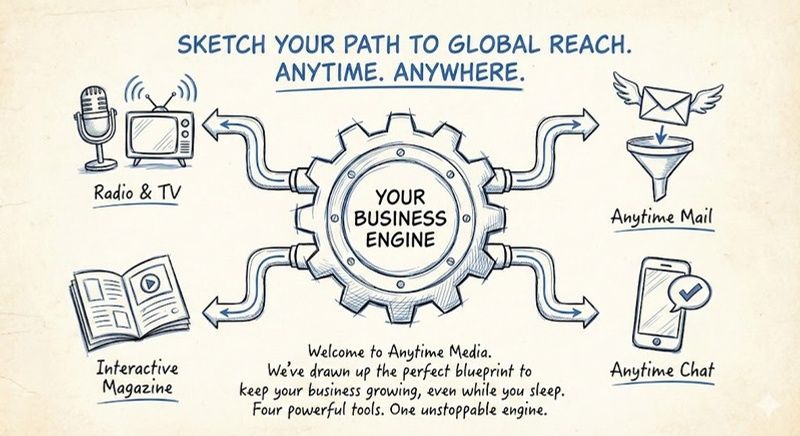
Reinforcing Professionalism & Future
Positioning
When Someone Says No
Do not collapse the frame.
Instead, reinforce professionalism.
The Power Statement
"I respect that. I only want to move forward when
there's full alignment."
What This Does
That sentence preserves authority. It signals
standards.
The Result
Standards increase perceived value.
You're demonstrating that you have standards, that you're selective, and that you only work with
people who are truly ready.
Reframing 'No' into Future Positioning
The Wrong Way to Keep Doors Open
Avoid saying, "Call me when you're ready." This
puts the burden on them, signals a lack of a
clear process, and can make you seem
desperate or passive.
The Right Way to Keep Doors Open
Instead, propose a clear, respectful, and value-
driven follow-up plan. For example, "Based on
what we discussed, it sounds like X is the
hurdle. Would you be open to revisiting this in
[specific timeframe] once X is addressed?"
Advanced Technique: The 60-Day Revisit
If a 'no' is genuinely about timing or external factors, propose a structured 60-day revisit. Frame it as
an opportunity for them to track progress on their end, while you stay informed about their
evolving needs. This turns a flat 'no' into a conditional 'later' with a defined path forward,
maintaining your professional relationship without pressure.
This approach subtly shifts the dynamic, placing you as a valued consultant rather than a pushy
salesperson, increasing the likelihood of a future "yes."
Emotional
Composure &
Positioning Tests
The calmest
person in the
conversation
holds power.
When You
Remain
Grounded
You demonstrate
abundance.
Abundance attracts
respect.
When You Show
Desperation
Desperation repels it.
You must believe something deeply: There are
always more buyers.
This unwavering belief is key, as clients often test your
resolve and positioning. A "no" isn't always a definitive
rejection; it can be a test of your conviction, your
perceived value, and your emotional composure. When
someone says no and you remain grounded, you
demonstrate abundance. Scarcity mindset leaks
through tone, and tone determines positioning. By
maintaining your composure, you show that you
operate from a place of strength, signaling that you are
selective and only work with those who are truly aligned
with your value. This reinforces your professional
standing and avoids falling into the trap of appearing
desperate.
0
1
0
2
0
3
0
4
0
5
Your Professional 'No' Framework &
Metrics
When to Let Go
If someone lacked urgency, lacked investment
readiness, and resisted structure — let them go.
High-ticket systems focus on qualified
alignment. Not forced conversion.
The Strategic Approach
Instead of feeling discouraged after a no, you
log it strategically:
Reason for hesitation
Timeline shift
Financial barrier
Emotional barrier
You tag it. You re-engage later with structure.
Transformation: Now "no" becomes data. And data improves conversion.
Professional 'No' Framework: A 5-Step Approach
Acknowledge
Recognize and validate their
decision without argument or
pressure.
Clarify
Gently probe for the underlying
reason behind the "no" to gain
insight.
Define Trigger
Identify what specific future
event or condition might
change their stance.
Anchor Timeline
Establish a clear, mutually agreed-upon
timeframe for re-engagement, if applicable.
Exit Confidently
Conclude the interaction on a positive,
professional note, maintaining your value.
Building Layered
Revenue
Immediate Closes
Revenue today
7-Day Follow-Up
Revenue this week
30-Day Re-engagement
Revenue this month
Layered
revenue is
stable revenue.
And stability builds confidence.
Between immediate closes, 7-day follow-up, and 30-day
re-engagement — your revenue becomes layered. This
multi-timeframe approach creates predictable income
streams.
Your Take-Action Tools
Before Module 6 (where we install the full WhatsApp Revenue Engine with CRM integration), write
your standardized responses:
Financial no
Your diagnostic question
Timing no
Your criteria question
Uncertainty no
Your clarity question
Keep them calm. Keep them structured. Keep them detached.
Because the professional handling of "no" is what separates casual sellers from high-ticket closers.
Next up: Module 6 – Installing the WhatsApp
Revenue Engine (CRM Integration)

08:30
Fri, 20 August
What is the key to
self-confidence?
Q U E S T I O N
Self-confidence is developed by
taking action. It's one thing to learn
to think positive, but when you start
acting on it, you change yourself.
A N S W E R

Structuring Your
WhatsApp Sales
Pipeline
Perfect. Now
we scale this
into a real
system.
Up until now, you've built skill. Now we build
infrastructure.
Skill without
structure creates
inconsistency.
And inconsistency
kills predictable
revenue.
Scattered
conversations hide
potential sales and
frustrate clients.
A clear pipeline acts
as a visual map,
guiding every
interaction.
Step 1: Define Your Pipeline Stages
New Lead
Qualified
Call Booked
Your WhatsApp sales pipeline should have clear stages. At minimum:
1
New Lead
2
Qualified
3
Call Booked
4
Proposal / Decision
Pending
5
Closed – Won
6
Closed – Lost
7
Follow-Up / Nurture
Every conversation must
live in one of these stages.
If it doesn't, it gets lost.

Pipeline Stages 1-2:
New Lead & Qualified
Stage 1: New
Lead
Entry Point
Anyone who
messages you enters
here
No Assumptions
No emotional
attachment
Just Entry
Clean slate for every
prospect
Anyone who messages
you enters here. No
assumptions. No
emotional attachment.
Just entry.
Stage 2:
Qualified
Meets Criteria
The lead aligns with
your ideal customer
profile
Expressed
Interest
They've shown
genuine curiosity in
your offering
Potential Fit
Identified a clear
need your solution
can address
Once a new lead meets
your predefined
qualification criteria and
has shown genuine
interest, they move to
this stage.
Stage 3: Call Booked
The Action
Once they book a strategy call, move them
immediately
The Benefit
This gives you visibility on future revenue
potential
Once they book a strategy call, move them immediately. This gives you visibility on future revenue
potential. You now know exactly how many opportunities are in your pipeline and can forecast
accordingly.

Stage 4: Proposal / Decision Pending
When This Happens
After the call, if they haven't decided, they live
here.
What This Triggers
This stage triggers your 7-day follow-up
sequence.
No improvising. Just execution.
After the call, if they haven't decided, they live here. This stage triggers your 7-day follow-up
sequence. You're no longer guessing when to follow up — the system tells you exactly what to do
and when.
Coming Next: We'll continue building out the remaining pipeline stages and integrate
your CRM system for complete visibility and automation.
The Foundation You've Built
Structured Pipeline
Organised lead flow
system
Automated Welcome
Instant first touch
engagement
Qualification
Filtering
Pre-qualified prospects
only
Now that you have these core systems in place, it's time to unlock scale. Because without
segmentation, every message feels generic. And generic messaging lowers conversion.
High-ticket systems thrive on precision. Precision increases relevance. Relevance increases
response. Response increases revenue.
Today, we're installing the segmentation layer of your WhatsApp Revenue Engine.
Tags, Segmentation & Broadcast
Strategy
Master the segmentation layer of your WhatsApp Revenue Engine and unlock precision messaging
that drives high-ticket conversions.

Part 1: Why Tags Matter
Tags are simple labels attached to
contacts. But strategically used,
they become powerful revenue
filters.
Instead of viewing your WhatsApp
contacts as one big list, you divide
them into meaningful categories.
Each tag gives you intelligence.
Intelligence gives you leverage.
Leverage increases conversion.
Essential Tag Categories
Hot Lead
Warm Lead
Cold Lead
High Urgency
Low Urgency
Budget Aligned
Not Budget Aligned
Past Client
No-Show
Follow-Up Required
Re-Engage 30 Days

The Power of
Precision Messaging
Now here's why this matters. If you send the same
broadcast to someone ready to buy, someone who said
no, and someone just exploring — you dilute impact.
Segmentation protects positioning.
Hot Leads
Should receive urgency-based messaging
Cold Leads
Should receive value-based messaging
Past Clients
Should receive upgrade or referral messaging
Different intent requires different tone.

Part 2: Behavioural Segmentation
The most powerful segmentation is behaviour-based. Not assumptions. Behaviour.
Behaviour predicts buying probability. Probability guides messaging strategy.
Said Not
Now
Didn’t Show
Booked Call
Completed
Qual
Asked
Pricing
Examples of behavioural triggers:
Asked about
pricing
Tag: Price Aware
Completed
qualification
Tag: Qualified
Booked a call
Tag: Engaged
Didn't show up
Tag: No-Show
Said "not now"
Tag: Future Opportunity
Strategic Broadcast Messaging
Now let's talk about broadcast strategy. Broadcast is not spam. Broadcast is strategic reactivation.
But it only works when segmented.
Never blast your entire list with: "Hey we have spots open." That kills credibility.
Instead, send targeted broadcasts:
1
High Urgency
Segment
"Opening 5 new client
spots next week. If solving
X is still a priority for you,
this is the right window."
This lands well with
people already
emotionally activated.
2
Warm Segment
"Quick question — are you
still aiming to hit X this
quarter?"
This reactivates goal
awareness.
3
Cold Segment
"Seeing a lot of business
owners struggle with X
lately. If you're navigating
that, I can share what's
working."
This reopens curiosity
without pressure.
The Broadcast Formula
Formula Step 1
Placeholder content for
step 1.
Formula Step 2
Placeholder content
for step 2.
Formula Step 3
Placeholder content for
step 3.
Broadcast Frequency Guidelines
Guideline 1
Placeholder content for guideline 1.
Guideline 2
Placeholder content for guideline 2.
Advanced Pipeline Segmentation
Now here's the advanced strategy. Segment based on stage in pipeline.
Decision Pending
Follow-Up 30 Days
Closed Won
For example:
If someone is in "Decision
Pending," you do NOT send
them generic marketing
messages. You send
structured follow-up.
If someone is in "Follow-Up
30 Days," you send re-
engagement.
If someone is "Closed Won,"
you send upsell or referral.
This is how WhatsApp transforms from chat app into revenue engine.
Compliance and
Reputation
Management
Now let's address compliance and reputation. Always
include soft opt-out language in broadcasts.
Example: "If you'd rather not receive updates, just let
me know."
Respect
builds trust
Trust
builds longevity
Longevity
builds scalable income

From Guesswork to
Certainty
Here's the powerful outcome.
Instead of
wondering:
"Who should I
message?"
You know.
Instead of guessing:
"Who might convert?"
You see it.
Data replaces emotion
Systems replace chaos
Revenue replaces randomness
The Control Advantage
Now let's zoom out. With tags and segmentation, you now control:
Who hears what
Targeted audience
selection
When they hear it
Perfect timing strategy
Why they hear it
Relevant context delivery
Confidence
Clarity
Control

Before we move into the final lesson of this course — where we turn everything into a fully
integrated WhatsApp Revenue Machine — here's your take-action tool:
Create at least 8 tags today:
New Lead
Qualified
Call Booked
Pending
Closed Won
Closed Lost
30-Day Re-
Engage
Past Client
Start tagging your last 20 conversations. See how different your visibility feels.
Because visibility creates control. And control creates predictable revenue.
Next up: 📘 Module 6 – Lesson 4: Turning This Into a Predictable WhatsApp Revenue Machine
This is where everything connects. Let's finish strong.

📘 Module 6 – Lesson
4: Turning This Into a
Predictable
WhatsApp Revenue
Machine
This is where everything connects. We're turning skill,
automation, and tracking into a predictable revenue
machine.

Your Complete System Overview -
Turning This Into a Predictable
WhatsApp Revenue Machine
This is where everything connects. We're turning skill, automation, and tracking into a predictable
revenue machine. You now have:
A structured
qualification
system
Authority
positioning inside
conversations
A high-ticket call
framework
A 7-day follow-up
engine
A 30-day re-
engagement
system
A defined pipeline
Automation at the
front end
Tags and
segmentation
Now we turn it into a predictable machine. Because skill + automation + tracking = scale.
Step 1: Control the Input (Traffic)
Your machine only works if leads enter consistently. This can come from:
Click-to-WhatsApp ads
Social media DMs redirected to WhatsApp
Website buttons
Email list traffic
Referrals
The key is this: Traffic must flow into WhatsApp — not random platforms.
Centralisation
creates control
Control
creates consistency
Let's zoom out. Your WhatsApp Revenue Machine runs on five moving parts:
Traffic
Drive targeted
visitors into the top
of the system.
Qualification
Filter leads with
your structured
qualification
process.
Booking
Convert qualified
leads into scheduled
high-ticket calls.
Closing
Use the call
framework to secure
client
commitments.
If any one of those breaks, revenue becomes inconsistent. But when they operate together — you
build momentum.

Step 2: Automate First Touch
Every new lead:
Instant welcome
Menu selection
First qualification question
CRM stage assignment
No manual lag.
Speed
Respond
instantly to new
leads
Trust
Build confidence
and credibility
Professionalism
Clear,
automated first
touch
Step 3: Manual Authority Layer
Automation filters.
You step in with skill.
Deep qualification
Desire amplification
Authority framing
Transition to call
This is where your skill multiplies conversion.
Step 4: Structured Call + Immediate
Follow-Up
1
Calls follow
the 5-phase
structure
2
Investment is
presented
calmly
3
Silence is held
4
Follow-up
runs
automatically
if needed
No emotional chasing. Just system.
Step 5: Layered Revenue
Core Offerings
Foundation of our revenue generation
through primary product/service sales.
Premium Services
Enhanced offerings, upsells, and cross-sells
to existing clients.
Recurring Subscriptions
Stable, predictable income from
membership and subscription models.
Strategic Partnerships
Joint ventures and collaborations
expanding market reach and revenue
streams.
Recurring &
Partnerships
Subscriptions and strategic
alliances
Premium Services
High-touch add-ons and
upgrades
Core Offerings
Base products and standard
packages
This layered approach ensures diversified and sustainable income streams for long-term growth.

Hey Chidi Eze how are you
doing over there?
I'm fine, how are you gonna
come back here?
I,m fine I'll be home next
month wish me luck
@reallygreatsite
8:30
02 May, 2021
appendices

🎁 Done-For-You Implementation Kit
This comprehensive bundle provides everything you need to implement the Chat to Cash Pro
system, delivered in a ready-to-use digital format.
PDF Workbook (Branded)
Includes full scripts, pipeline builder,
qualification builder, call structure planner,
and follow-up tracker.
CRM Setup Checklist
Detailed guide for pipeline stages,
automation scripts, tag structure, broadcast
plan, and weekly KPI dashboard template.
70+ Copy-Paste WhatsApp Scripts
Pre-written scripts for qualification, price
framing, objections, no-shows, follow-ups,
re-engagement, scarcity drops, and
broadcast campaigns.
Call Cheat Sheet (Printable)
A quick-reference guide for effective sales
calls, ready to print and use.
30-Day Launch Plan
A step-by-step roadmap to launch your
Chat to Cash Pro system in just one month.
Webinar Replay Funnel Template
A proven template to turn your recorded
webinars into evergreen sales assets.
Sales Page Template
A high-converting template to showcase
your offerings and drive conversions.
Bonus: Objection Psychology
Guide
Understand and overcome common
objections with psychological insights.
Install everything using WhatsApp CRM from www.sellwhileyousleep.co.za to automate
this entire system.
2️⃣ Automate First Responses
When someone messages your business, they
should instantly receive:
A greeting
Warm welcome message
A qualification question
Understand their needs
A menu of options
Guide their next step
Example:
"Hi! Thanks for reaching out 👋
Are you interested in:
1️⃣ Pricing
2️⃣ Booking a call
3️⃣ Customer support?"
Filters serious buyers
Identifies genuine interest
Saves your team hours per week
Reduces manual workload
Automation handles volume. Humans close deals.

3️⃣ Use Labels &
Segmentation
Segment contacts based on:
Buyer status
Lead, prospect,
customer
Interests
Product
preferences
Location
Geographic
targeting
Product type
Category interest
Past purchases
Purchase history
This allows you to send highly targeted broadcasts
instead of blasting everyone the same message.
Targeted messaging = higher
conversions.
4️⃣ Use Broadcasts Strategically (Not
Spam)
WhatsApp broadcasts allow you to send messages to multiple contacts individually.
Best uses:
Flash promotions
Limited-time offers
Launch reminders
New product
announcements
Appointment
reminders
Booking confirmations
Abandoned cart follow-ups
Recovery messages
Educational drip sequences
Value-building content
Important rule: Only message people who opted in.
Otherwise, you risk number bans and low trust.

5️⃣ Assign Conversations to Team
Members
If you have a team:
Assign sales inquiries to sales
reps
Assign support to support
agents
Track response time
Monitor performance
This avoids:
Two reps messaging
the same lead
Missed messages
Internal confusion

6️⃣ Integrate With Your Other Systems
The real power happens when WhatsApp CRM connects to:
Facebook/Instagra
m Ads
Direct ad click-to-
chat
Website forms
Capture web leads
Payment systems
Process transactions
Email marketing
tools
Multi-channel
campaigns
E-commerce stores
Order management
Example flow:
Send
Payment
Assign Rep
Auto Qualify
Click
FB Ad Click
That's a full revenue loop.
🚀 The Most Powerful Use Case
The best-performing businesses use WhatsApp CRM as a:
🔁 Lead Capture + Follow-
Up Engine
Here's the formula:
01
Drive traffic to WhatsApp
Ads or website
02
Auto-qualify with chatbot
Filter intent
03
Capture name + phone +
interest
Build database
04
Move into CRM pipeline
Track progress
05
Assign to closer
Human touch
06
Automate follow-up if
no response
Never lose leads
07
Re-engage via broadcast later
Long-term nurture
Most sales happen in the follow-up. WhatsApp CRM makes follow-up automatic.
🏆 Who Benefits Most From
WhatsApp CRM?
E-commerce
brands
Coaches &
consultants
Real estate
agents
Clinics &
service
providers
Course creators
Agencies
Local businesses
If your customers already use WhatsApp, it's one of the highest ROI tools
available.
⚠️ Common Mistakes to Avoid
❌ Using personal WhatsApp
Instead of WhatsApp Business API
❌ Not tracking conversations
In a pipeline
❌ No automation
Manual replies only
❌ Sending too many broadcasts
Message fatigue
❌ No opt-in system
Spam complaints
❌ Not measuring response time
Missing performance data
💡 Final Summary
A WhatsApp CRM is powerful because it combines:
High engagement
messaging
Structured lead
management
Automation +
human touch
🔹 Example WhatsApp CRM Message
Templates
These assume the user has opted in.
The following sections provide proven message templates you can adapt for your
business. Each template is designed for a specific stage of the customer journey.
🟢 A. First Auto-Reply (After Opt-In)
This message is sent immediately after a user opts in. It confirms their subscription and
sets expectations.
Hi [Customer Name], thanks for opting in to receive updates from [Your Business
Name]! We'll send you occasional messages about new products, exclusive offers, and
important news. You can reply STOP at any time to unsubscribe. What kind of
[product/service] are you most interested in?

🟢 B. Lead Follow-Up (No Response After
24–48 Hours)
"Hey {{First Name}}, just checking in 😊
Still interested in [service/product name]?
I can send over pricing details or book you in this week
if you'd like."
Why this works:
Light, non-pushy
Gives clear next step
Reopens conversation naturally
🟢 C. Promotion / Offer Broadcast
"🔥 48-Hour Offer
Hey {{First Name}},
we just opened 10 discounted spots for [service/product].
Would you like the details before they fill?"
✅ Do
Personalize
Create urgency
Keep it short
❌ Don't
Send daily
Use all caps
Oversell
💡 Tip
Only send to engaged
contacts who've interacted
recently

🟢 E. Post-Purchase Follow-Up
🟢 D. Appointment Reminder
"Hi {{First Name}} 👋
Just confirming your call tomorrow at 3PM.
Reply YES to confirm or RESCHEDULE if needed."
"Hi {{First Name}} 😊
Just checking in — how's everything going with [product/service]?
If you need help, just reply here."
This increases retention and referrals.
quiz
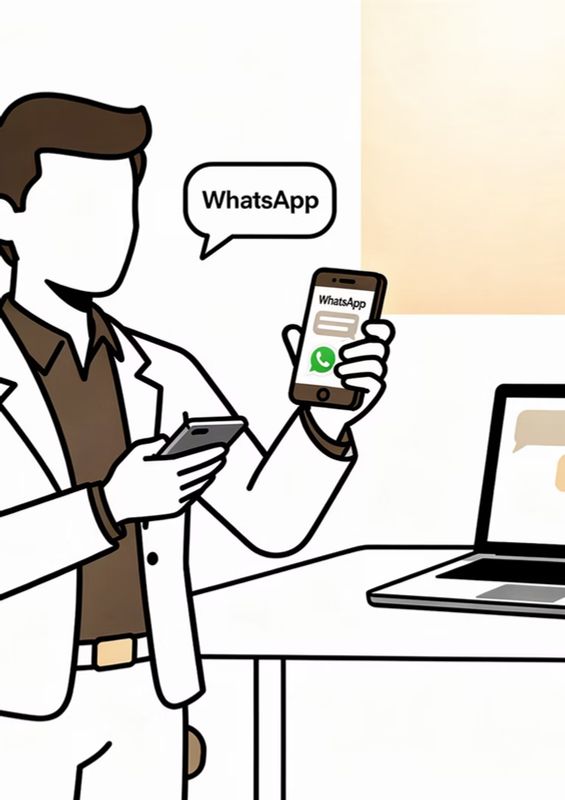
QUIZ BLOCK 1 – The Mindset Trap
Q1: A prospect messages you “Hi, can you send details?” What is the most dangerous response pattern?
Answer: Immediately sending a long explanation. It feels helpful but silently destroys authority and control.
Q2: Why do random WhatsApp chats feel productive but hurt revenue?
Answer: Because activity feels like progress. Without structure, conversations drift instead of convert.
Q3: When does a WhatsApp sales conversation begin to die?
Answer: The moment it stops moving forward with intention. Stagnation equals decay.
Q4: What invisible signal do you send when you eagerly answer everything?
Answer: That you’re chasing the sale rather than guiding the decision — a subtle but costly status drop.
Q5: High-ticket sales on WhatsApp resemble chatting or choreography? Why?
Answer: Choreography. Every move has timing, direction, and purpose.
QUIZ BLOCK 2 – Buyer Psychology Reality
Q1: What are high-ticket buyers secretly trying to avoid?
Answer: Regret. More than spending money, they fear making the wrong move.
Q2: Why does “more information” often reduce closing probability?
Answer: Because uncertainty rarely disappears through volume — it disappears through clarity.
Q3: A buyer hesitates after hearing price. What is the intelligent interpretation?
Answer: Not “they can’t afford it,” but “something still feels unclear or risky.”
Q4: Which closes premium clients faster: persuasion or certainty?
Answer: Certainty. Confidence transfers more powerfully than argument.
Q5: Why do high-ticket decisions connect to identity?
Answer: Because buyers are reinforcing who they believe they are becoming, not just purchasing outcomes
QUIZ BLOCK 3 – Authority & Positioning
Q1: If you are seen as an option instead of an authority, what changes?
Answer: Everything. Options get compared. Authorities get trusted.
Q2: What quietly erodes authority in text conversations?
Answer: Over-explaining, apologizing for price, and approval-seeking language.
Q3: Why is selective language psychologically powerful?
Answer: People value what feels chosen, not what feels available to everyone.
Q4: True authority feels loud or grounded?
Answer: Grounded. Calm certainty always outranks aggressive enthusiasm.
Q5: Why does desperation repel serious buyers?
Answer: Because confidence signals safety, while neediness signals risk.
QUIZ BLOCK 4 – Qualification Intelligence
Q1: What is the real purpose of qualification?
Answer: Separating momentum from distraction, not simply gathering information.
Q2: Why do objections explode after weak qualification?
Answer: Because unresolved uncertainty compounds silently until price forces confrontation.
Q3: Which is more valuable: knowing what a prospect wants or why they want it?
Answer: Why. Motivation drives decisions; desires alone do not.
Q4: What happens when urgency is never clarified?
Answer: Conversations linger in curiosity instead of moving toward commitment.
Q5: Qualification depth influences closing how?
Answer: Deep qualification makes closing feel like confirmation. Shallow qualification makes
it feel like convincing.
QUIZ BLOCK 5 – Buyers vs Browsers
Q1: What is the most reliable indicator of a serious buyer?
Answer: Specificity. Decisive clients speak in concrete terms.
Q2: Why is “I’m just looking” not a rejection?
Answer: It reflects timing and readiness, not final intent.
Q3: What mistake drains emotional energy fastest?
Answer: Treating low-commitment curiosity like high-probability opportunity.
Q4: Should browsers be persuaded or filtered?
Answer: Filtered. Persuasion wastes time; filtering protects momentum.
Q5: Why do buyers respond differently than browsers?
Answer: Buyers seek resolution. Browsers seek stimulation.
QUIZ BLOCK 6 – Price Psychology
Q1: Why does price shock occur?
Answer: Because numbers without emotional context feel heavier than they actually are.
Q2: What transforms price from threat to logic?
Answer: Linking investment to urgency, pain, and desired transformation.
Q3: Why are price ranges psychologically smoother?
Answer: Flexibility reduces resistance compared to fixed anchors.
Q4: What weakens price delivery instantly?
Answer: Hesitation, apology, or justification.
Q5: Premium pricing should feel like what?
Answer: A natural extension of value, not an uncomfortable confession.
QUIZ BLOCK 7 – Handling Low-Intent Leads
Q1: What is the true danger of entertaining every lead?
Answer: Decision fatigue and authority erosion.
Q2: Why is chasing low-urgency prospects harmful?
Answer: Your energy shifts from leadership to persuasion.
Q3: What does calm disengagement signal?
Answer: Confidence and selectiveness.
Q4: Why can detachment increase conversions?
Answer: Pressure decreases and perceived value rises.
Q5: Not every sale is valuable. Why?
Answer: Misaligned clients often cost more energy than revenue.
QUIZ BLOCK 8 – Conversation Control
Q1: Who truly leads a sales conversation?
Answer: The person shaping direction through intelligent questions.
Q2: Why is pacing critical in WhatsApp selling?
Answer: Momentum depends on rhythm, not speed alone.
Q3: What kills conversational authority fastest?
Answer: Reactive answering instead of structured guidance.
Q4: Why are summaries powerful?
Answer: They reinforce clarity and emotional investment.
Q5: Silence after a strong question creates what effect?
Answer: Cognitive engagement and deeper reflection.
QUIZ BLOCK 9 – Desire Mechanics
Q1: Why do buyers rarely act when the gap feels small?
Answer: Urgency thrives on contrast.
Q2: Which is more persuasive: benefits or consequences?
Answer: Consequences. Humans act faster to avoid loss.
Q3: Why does future visualization increase conversion?
Answer: Imagined outcomes feel psychologically real.
Q4: Desire intensifies when prospects articulate what?
Answer: The cost of staying the same.
Q5: Why is self-persuasion superior?
Answer: Internally generated conclusions feel safer and more convincing
.
QUIZ BLOCK 10 – The Call Transition
Q1: Why should the call never feel like a sales trap?
Answer: Resistance begins when pressure is perceived.
Q2: What makes a call invitation feel natural?
Answer: Logical sequencing after clarity and qualification.
Q3: Why is delayed response after buyer interest risky?
Answer: Emotional momentum cools rapidly.
Q4: What does clarity of next step prevent?
Answer: Ghosting and indecision drift.
Q5: High-converting transitions create what feeling?
Answer: Relief, not pressure.

📘 Module 2 – Lesson 4
Handling "Just Looking" Leads
Without Wasting Time
An 800–1500 word voiceover script from the Chat to Cash Blueprint training course.
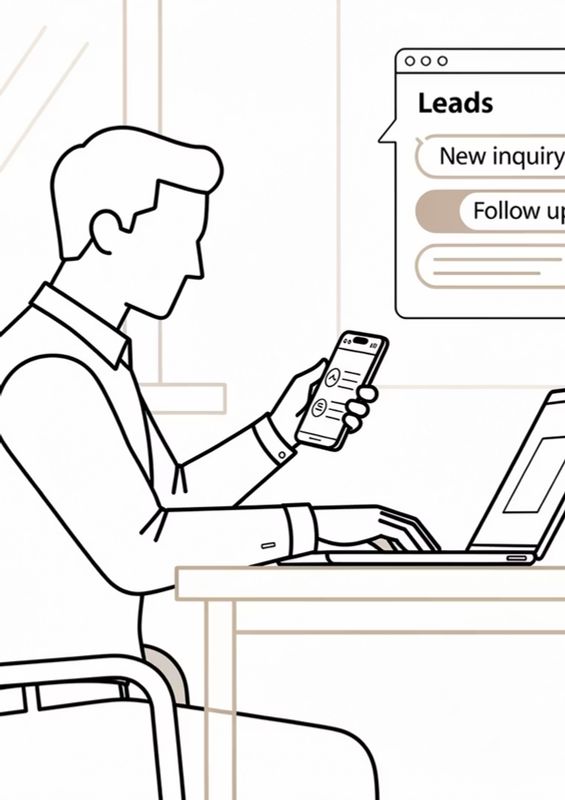
📘 Module 3 – Lesson 1
Conversation
Leadership
Techniques
Identifying
Buying Signals
vs. Browsers
Master the art of discernment and stop wasting time
forever.
📘 Module 6 – Lesson 3: Tags,
Segmentation & Broadcast Strategy
Master the segmentation layer of your WhatsApp Revenue Engine and unlock precision messaging
that drives high-ticket conversions.